







We are exhibiting • Get Free Entry to The Northern Homebuilding & Renovating Show 2025

Projects

Garden Room Sanctuary / Projects

Suffolk Garden Room

Some garden rooms are designed for relaxation. Others are built for work. This one was created for something far more specific.

From the outset, the brief centred around a single defining requirement: height. Not just for architectural impact, but to enable a fully functional golf simulator to be a part of our customers’ garden.

What followed was the design and construction of a 7m x 4.5m Swaledale Garden Room, carefully adapted for this specialist use.

With an internal apex height of 3.3 metres, enhanced acoustic insulation, and a modern finish, the result is a garden room that looks as good as it performs.

The Build Process

Step 1: Preparation & Foundations

Every successful build begins below the surface.
For this project, a galvanised steel pile system was selected to provide a stable, low-impact foundation that would stand the test of time.

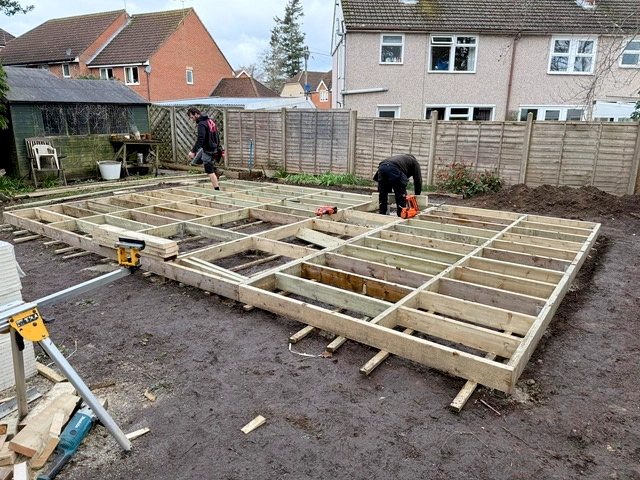
Once installed, a precisely levelled timber base was constructed across the footprint, creating a strong and reliable platform from which the structure could take shape.
18
Step 2: Framing the Structure

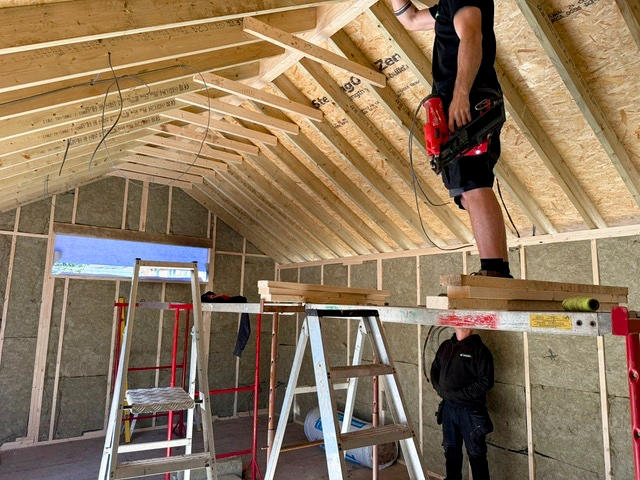
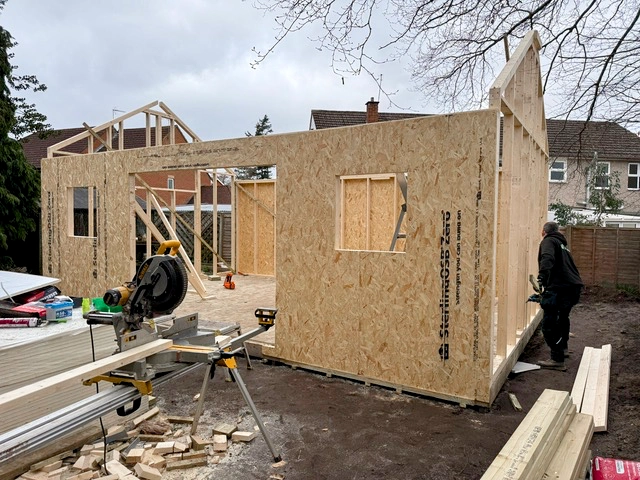
Next, the structural frame was assembled. The 4x2 stud walls, lined with OSB, formed a durable shell, while the pitched roof structure was carefully designed to achieve the generous internal height required.

14
Step 3: Weatherproofing

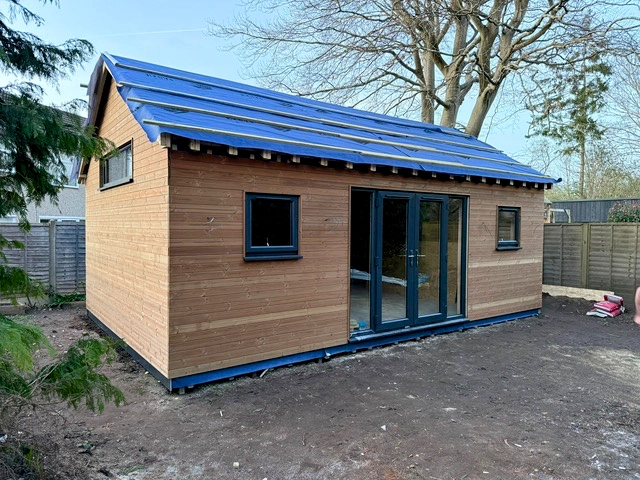
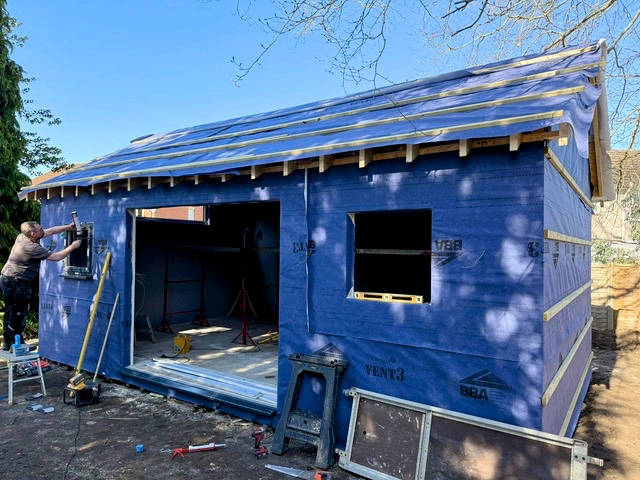
With the frame complete, the building was wrapped and sealed to create a fully weatherproof envelope.
This protective layer plays a vital role, allowing the structure to breathe while shielding it from the elements: a key step in ensuring long-term performance.

11
Step 4: Roofing

The roof structure was formed using 5x2 rafters, creating the framework for both strength and height.
Within this cavity, 75mm acoustic rockwool insulation was installed, followed by an internal layer of 25mm Kingspan insulation.

This combination not only enhances thermal efficiency but also significantly improves sound absorption: an essential consideration for a golf simulator environment.

12
Step 5: External Finishing

As the exterior finishes were applied, the building took on its final character.
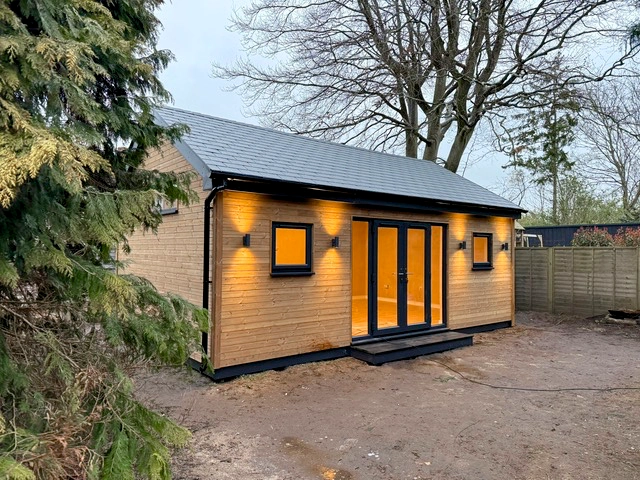
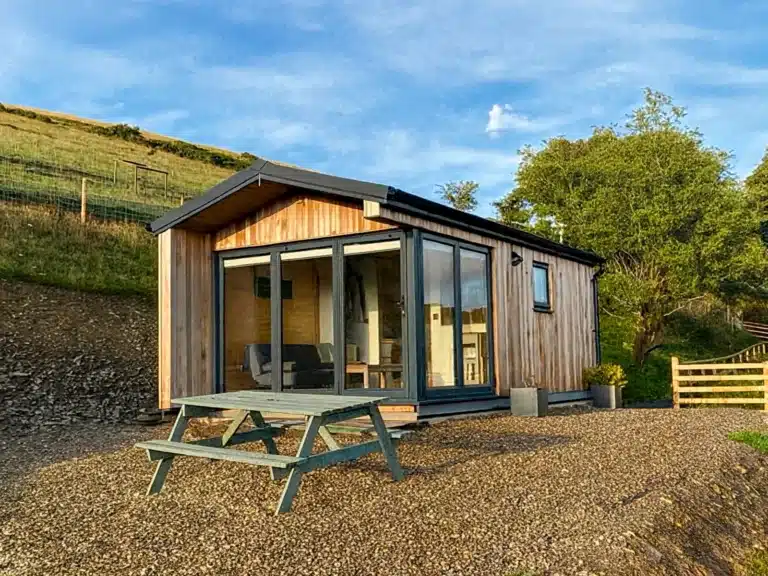
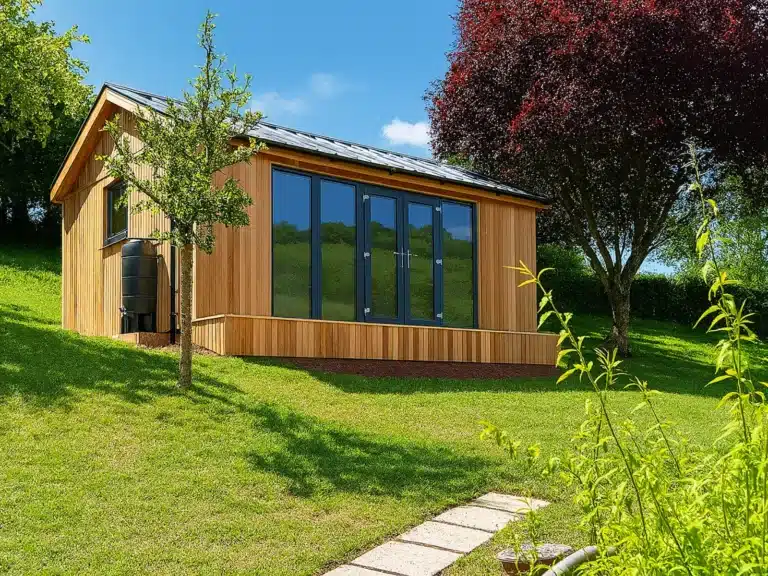
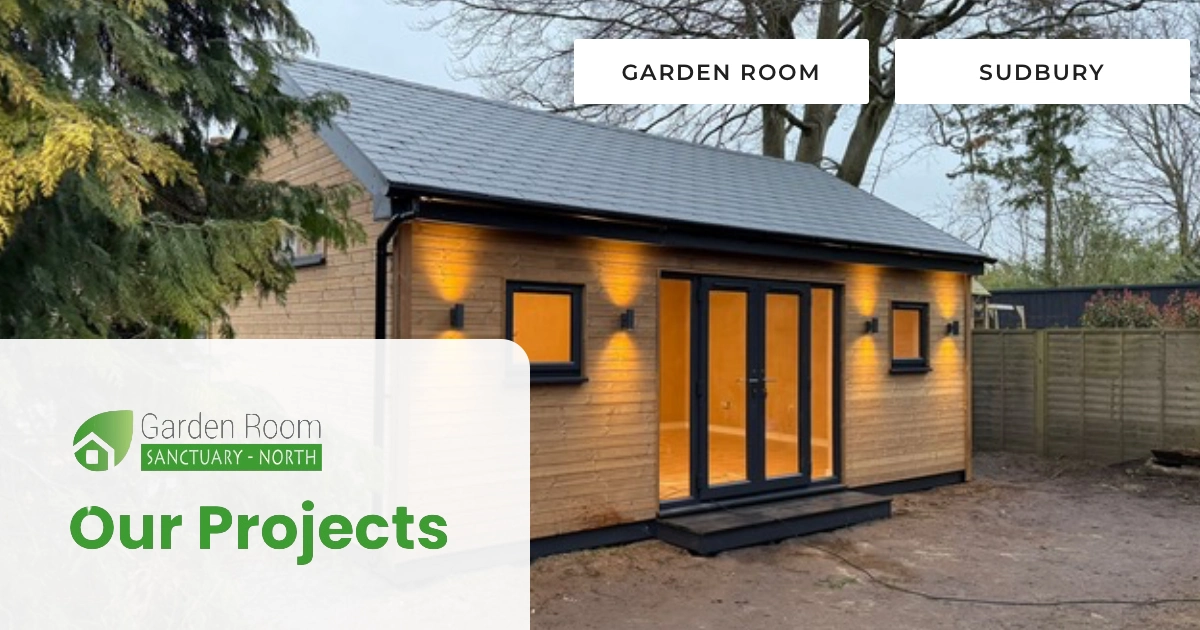
The front and left elevations were clad in horizontal Thermowood, introducing warmth and texture, while the rear and right sides were finished in metal sheeting, providing durability and a subtle contrast.

A slate roof completes the structure, adding a timeless, high-quality finish, while anthracite grey doors and windows sharpen the overall aesthetic.
To the front, a composite decking area creates a natural threshold into the space.

6
Step 6: Internal Finishing

Inside, the focus shifts to comfort, performance and finish.
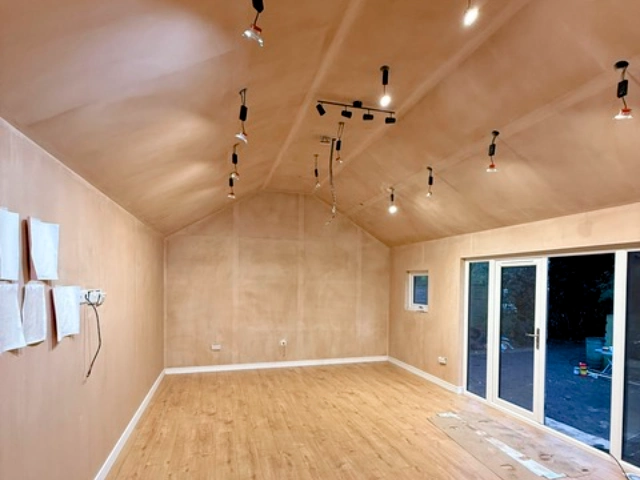
The walls were insulated using 75mm acoustic rockwool, with an additional 25mm Kingspan layer, before being lined with acoustic plasterboard and fully plastered.

Oak flooring grounds the space, while pre-painted skirting provides a clean, refined edge.


Above, a grid of dimmable LED spotlights ensures the lighting can adapt to different uses.

1
Step 7: Final Details

Large-format glazing was carefully positioned to balance natural light with functionality.
The French doors with side panels open up the front elevation, while a wide panoramic window on the side draws light deep into the space.

Electrical installation was completed to full certification standards, integrating power, lighting and external features seamlessly into the design.
A 3.5kW air conditioning unit provides both heating and cooling, ensuring the space remains comfortable throughout the year.

2
18
Step 1: Preparation & Foundations

Every successful build begins below the surface.
For this project, a galvanised steel pile system was selected to provide a stable, low-impact foundation that would stand the test of time.

Once installed, a precisely levelled timber base was constructed across the footprint, creating a strong and reliable platform from which the structure could take shape.
18
14
Step 2: Framing the Structure

Next, the structural frame was assembled. The 4x2 stud walls, lined with OSB, formed a durable shell, while the pitched roof structure was carefully designed to achieve the generous internal height required.

14
11
Step 3: Weatherproofing

With the frame complete, the building was wrapped and sealed to create a fully weatherproof envelope.
This protective layer plays a vital role, allowing the structure to breathe while shielding it from the elements: a key step in ensuring long-term performance.

11
12
Step 4: Roofing

The roof structure was formed using 5x2 rafters, creating the framework for both strength and height.
Within this cavity, 75mm acoustic rockwool insulation was installed, followed by an internal layer of 25mm Kingspan insulation.

This combination not only enhances thermal efficiency but also significantly improves sound absorption: an essential consideration for a golf simulator environment.

12
6
Step 5: External Finishing

As the exterior finishes were applied, the building took on its final character.
The front and left elevations were clad in horizontal Thermowood, introducing warmth and texture, while the rear and right sides were finished in metal sheeting, providing durability and a subtle contrast.

A slate roof completes the structure, adding a timeless, high-quality finish, while anthracite grey doors and windows sharpen the overall aesthetic.
To the front, a composite decking area creates a natural threshold into the space.

6
1
Step 6: Internal Finishing

Inside, the focus shifts to comfort, performance and finish.
The walls were insulated using 75mm acoustic rockwool, with an additional 25mm Kingspan layer, before being lined with acoustic plasterboard and fully plastered.

Oak flooring grounds the space, while pre-painted skirting provides a clean, refined edge.


Above, a grid of dimmable LED spotlights ensures the lighting can adapt to different uses.

1
2
Step 7: Final Details

Large-format glazing was carefully positioned to balance natural light with functionality.
The French doors with side panels open up the front elevation, while a wide panoramic window on the side draws light deep into the space.

Electrical installation was completed to full certification standards, integrating power, lighting and external features seamlessly into the design.
A 3.5kW air conditioning unit provides both heating and cooling, ensuring the space remains comfortable throughout the year.

2

The Result

The finished space feels open and effortless, with the increased ceiling height giving it a real sense of scale from the moment you step inside. It comfortably accommodates a full golf simulator setup, allowing for a natural, unrestricted swing without compromise.

Despite its performance-led design, the room remains calm and well-balanced, with clean lines and warm materials creating an environment that feels just as suited to everyday use.

It’s a space designed with a clear purpose in mind, but one that easily adapts: whether for practice, work or relaxing.